Liver Cysts
Understanding Liver Cysts and Their Treatment
Being told that you have a liver cyst can be worrying, but most liver cysts are harmless and never become cancerous. Many are discovered incidentally during ultrasound or CT scans performed for unrelated reasons.
Overview
What Are Liver Cysts?
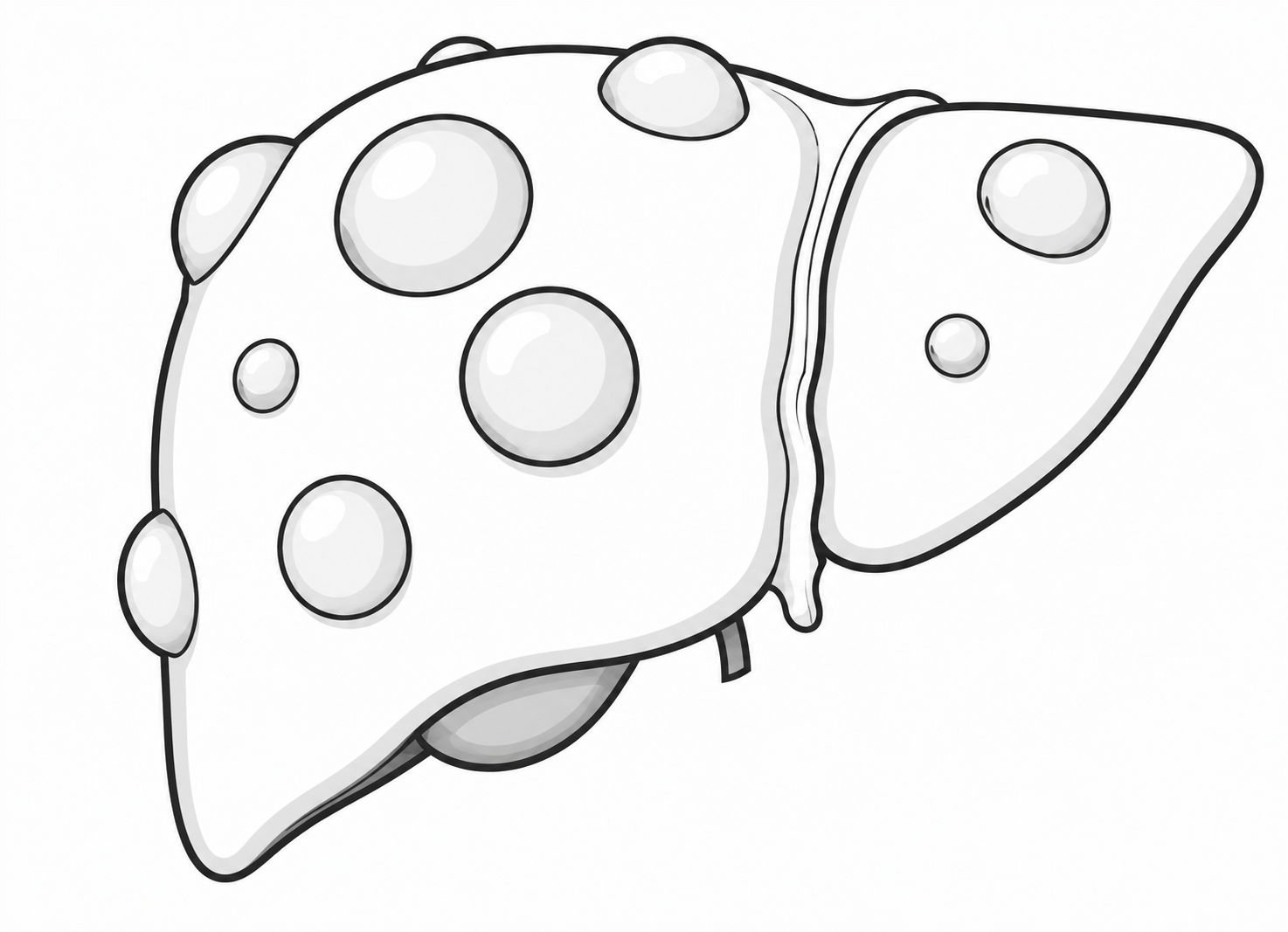
A liver cyst is a fluid-filled sac that develops within the liver.
Most liver cysts are simple cysts — meaning they are benign (non-cancerous), contain clear fluid, and usually cause no symptoms.
Liver cysts vary in size from a few millimeters to several centimeters. Many people have liver cysts without ever knowing it.
Most simple liver cysts require no treatment and only occasional follow-up imaging.
Types
Types of Liver Cysts
Distinguishing between cyst types is essential for determining the appropriate management for each patient.
Simple Liver Cyst
The most common type. Usually harmless and never becomes cancerous. Rarely requires treatment.
Polycystic Liver Disease
Multiple liver cysts caused by an inherited condition. Often associated with polycystic kidney disease.
Hydatid Cyst
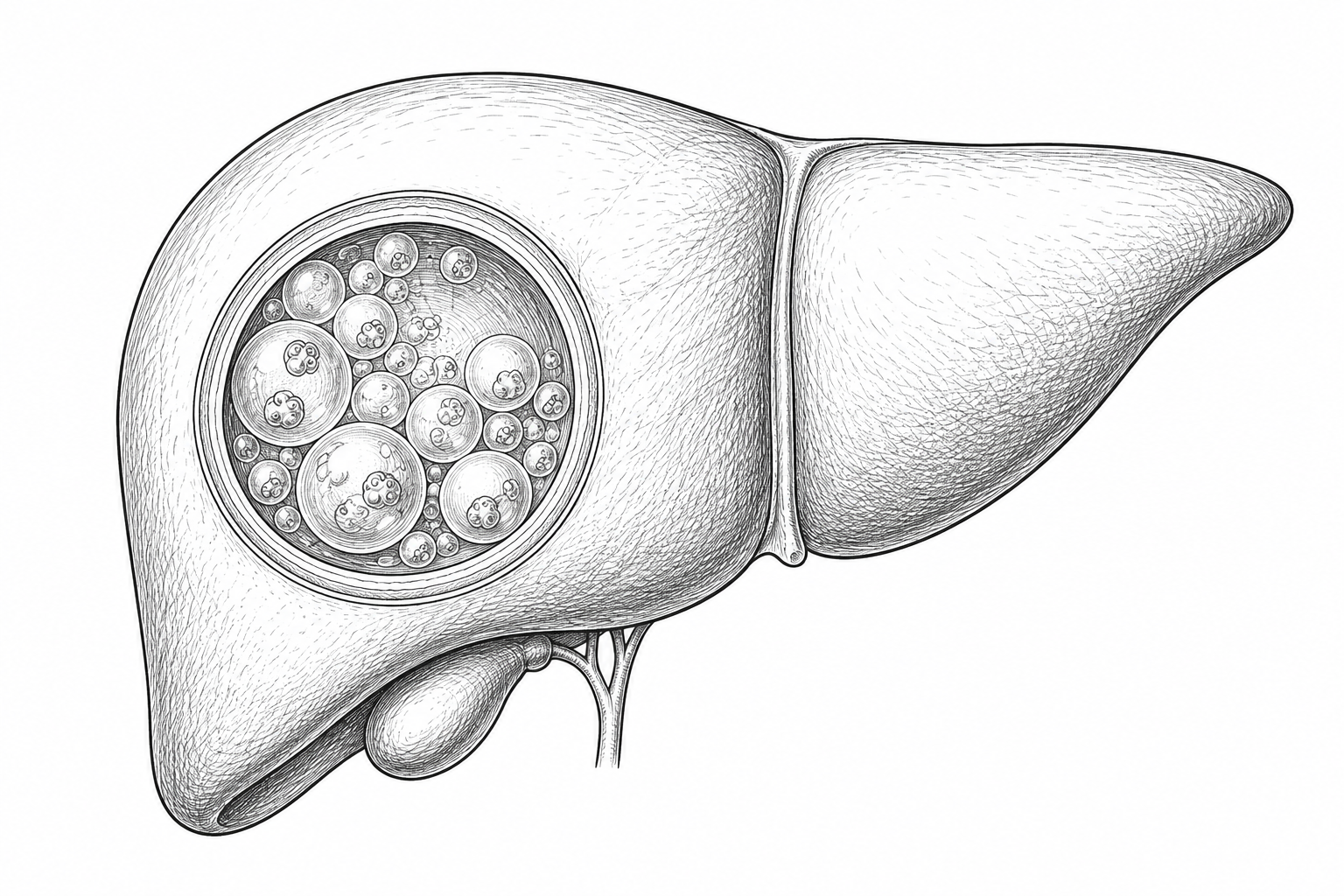
Caused by a parasitic infection. Requires specialized treatment.
Learn more →Cystic Liver Tumors
Rare cystic tumors that may require surgery because some carry a risk of malignant transformation.
Symptoms
Symptoms of Liver Cysts
Many liver cysts produce no symptoms at all.
The size of a cyst does not always determine whether it causes symptoms. Some very large cysts remain asymptomatic, while smaller cysts in certain locations may cause discomfort.
Diagnosis
How Are Liver Cysts Diagnosed?
Imaging usually provides enough information to distinguish simple liver cysts from more complex cystic lesions. Biopsy is rarely required.
Routine Ultrasound
The most common initial investigation for detecting liver cysts
CT Scan
Detailed imaging to define the size and nature of the cyst
MRI (if needed)
Precise evaluation of complex or indeterminate cysts
Review by Hepatobiliary Surgeon
Specialist assessment to determine cyst type and management plan
Personalized Management Plan
Individualized decision: surveillance or surgical intervention
Do Liver Cysts Turn Into Cancer?
Most simple liver cysts never become cancerous.
Certain uncommon cystic tumors may require additional evaluation because they carry a risk of malignant transformation. This is why specialist assessment is important when imaging findings are not typical of a simple cyst.
Treatment Indications
When Is Treatment Needed?
Treatment may be recommended when:
Most liver cysts do not require surgery.
Treatment
Treatment Options
Treatment is individualized based on cyst type, size, symptoms, and the patient's overall health.
Observation
Most patients only require periodic imaging. No intervention is needed for simple asymptomatic cysts.
Aspiration
Fluid is drained from the cyst. Aspiration alone has a high recurrence rate without additional treatment.
Aspiration with Sclerotherapy
Special medication is introduced after drainage to reduce recurrence. Suitable for selected patients.
Laparoscopic Fenestration
The preferred treatment for large symptomatic simple cysts. A portion of the cyst wall is removed, allowing permanent drainage.
Liver Resection
Reserved for selected patients with complex cysts or cystic tumors requiring surgical removal.
Recovery
Recovery After Surgery
Most patients undergoing laparoscopic cyst surgery recover quickly and return to normal activities within a few weeks.
Clinic Assessment
Comprehensive evaluation and surgical preparation
Operation
Usually laparoscopic — small incisions and faster recovery
Hospital Stay
Typically 1–2 days after laparoscopic surgery
Return Home
Most patients return home within two days
Routine Follow-up
Periodic imaging to confirm no recurrence
Understanding the Condition
Understanding Liver Cysts
Answers to common concerns and misconceptions raised by patients and their families.
Does every liver cyst need surgery?
No. Most simple liver cysts require no treatment and only occasional follow-up imaging.
Can a liver cyst become cancer?
Simple liver cysts do not become cancerous. However, some uncommon cystic tumors require specialist evaluation.
Can a liver cyst rupture?
This is uncommon. Very large cysts or those affected by trauma may occasionally rupture or bleed.
Should a liver cyst be drained?
Not always. Aspiration alone often results in recurrence. Long-term treatment depends on the type of cyst and whether it causes symptoms.
Can I live normally with a liver cyst?
Yes. Most people with simple liver cysts lead completely normal lives without any restrictions.
FAQ
Frequently Asked Questions
Why Choose Us
Why Choose Prof. Walid Elmoghazy?
Senior Consultant in HPB Surgery
Academic and clinical expertise in liver, pancreas, and biliary surgery
Clinical Lead of Liver Surgery & Transplantation
Leadership in the most complex liver resection and transplantation procedures
International Fellowship Training
Specialized training in Japan, UK, Canada, and France
1,000+ Major HPB Procedures
Extensive experience in liver, pancreas, and biliary surgery
Laparoscopic & Robotic Surgery
Full mastery of minimally invasive liver surgery including laparoscopic fenestration
Individualized Treatment
Personalized management for both simple and complex liver cysts
Second Opinion
Request a Second Opinion
If you have been diagnosed with a liver cyst and are unsure whether treatment is necessary, an expert second opinion can help determine the safest and most appropriate management. Patients may securely upload their medical files.
Concerned About a Liver Cyst?
Most liver cysts are harmless, but accurate diagnosis is important. If you have symptoms or would like confirmation of your diagnosis and treatment plan, schedule a consultation or request a second opinion.
 Hydatid Liver Cyst
 Liver Cancer
 Liver Metastases
 Gallstone Disease