Bile Duct Stones
Understanding Stones in the Common Bile Duct
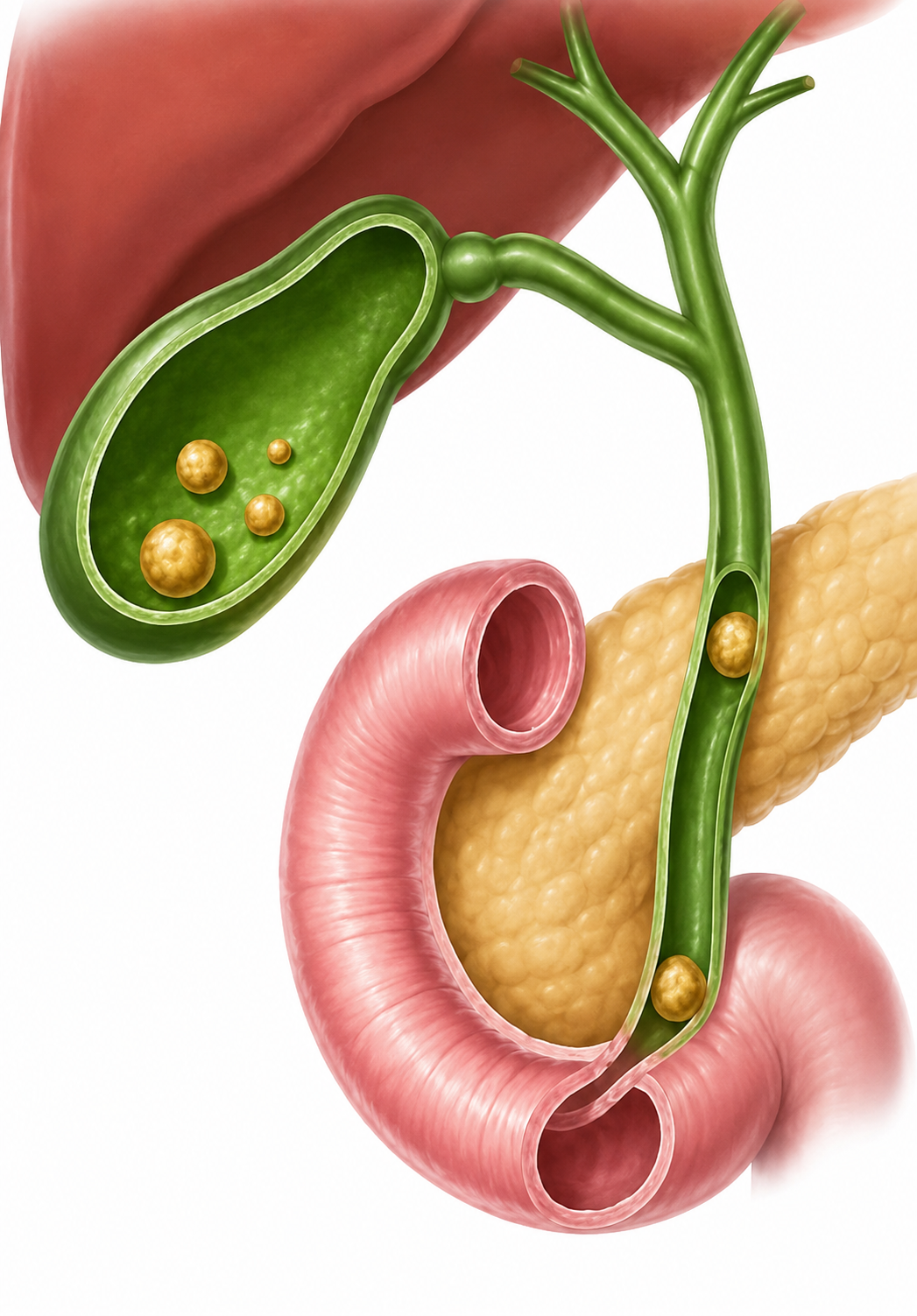
Bile duct stones occur when stones become lodged in the common bile duct, blocking the normal flow of bile from the liver to the intestine. Although many originate from the gallbladder, they can cause serious complications such as jaundice, infection, or pancreatitis if left untreated.
Overview
What Are Bile Duct Stones?
The common bile duct carries bile from the liver and gallbladder into the small intestine.
Sometimes gallstones leave the gallbladder and become trapped inside the bile duct. These are called bile duct stones or choledocholithiasis.
Less commonly, stones form directly within the bile ducts.
Unlike gallstones that remain inside the gallbladder, bile duct stones can obstruct bile flow and require prompt medical attention.
Key Difference
Gallstones vs. Bile Duct Stones
Many patients confuse the two conditions. Understanding the difference helps guide the right treatment decision.
Symptoms
Symptoms of Bile Duct Stones
Important Warning
Fever with jaundice and abdominal pain may indicate acute cholangitis, a potentially life-threatening infection requiring urgent treatment.
Complications
Possible Complications
Prompt treatment of bile duct stones prevents these serious complications.
Acute Cholangitis
Infection of the bile ducts. Symptoms include fever, jaundice, abdominal pain, and chills. Requires urgent treatment.
Acute Pancreatitis
A stone blocks the pancreatic duct. Can range from mild to life-threatening.
Obstructive Jaundice
Bile cannot drain normally, causing yellowing of the skin and eyes.
Liver Infection
Untreated obstruction can lead to serious infection and sepsis.
Diagnosis
How Are Bile Duct Stones Diagnosed?
MRCP and endoscopic ultrasound are highly accurate in detecting bile duct stones.
Symptoms
Assessment of symptoms and medical history
Medical Examination
Abdominal examination and jaundice assessment
Blood Tests
Liver function tests, pancreatic enzymes, inflammatory markers
Ultrasound
Detection of dilated bile ducts and gallstones
MRCP
Magnetic resonance imaging of bile ducts — highly accurate for duct stones
Endoscopic Ultrasound (EUS) — selected patients
Highly accurate for detecting small stones
ERCP or Surgery
Simultaneous diagnosis and treatment
Recovery
Post-treatment follow-up
Treatment
Treatment Options
ERCP
Endoscopic Retrograde Cholangiopancreatography
A flexible endoscope is passed through the mouth into the small intestine to remove stones from the bile duct. Often the first-line treatment.
Laparoscopic CBD Exploration
Minimally Invasive Surgery
Performed during laparoscopic gallbladder surgery. Allows removal of both the gallbladder and bile duct stones in a single operation.
Open Surgery
For Complex Cases
Recommended when minimally invasive treatment is not possible or in complex situations.
Temporary Biliary Drainage
For Critically Ill Patients
Used in critically ill patients until definitive treatment can be safely performed.
Surgical Indications
When Is Surgery Recommended?
The most appropriate treatment depends on the patient's anatomy, overall health, and available expertise.
Laparoscopic Approach
Laparoscopic Bile Duct Exploration
This minimally invasive procedure allows the surgeon to remove stones directly from the bile duct while performing laparoscopic gallbladder removal during the same operation.
Benefits include:
Treatment Approaches
One-Stage vs. Two-Stage Treatment
Both approaches are effective. The choice depends on the patient's condition, anatomy, and available expertise.
One-Stage Treatment
Two-Stage Treatment
Recovery
Recovery
Recovery depends on whether treatment involved ERCP alone or surgery.
Diagnosis
Confirmation of bile duct stones
Treatment (ERCP or Surgery)
Stone removal by the most appropriate method
Hospital Recovery
Post-treatment monitoring
Home Recovery
Rest and light diet
Follow-up
Assessment of treatment results and stone clearance
Return to Normal Activities
Depends on the type of treatment performed
Understanding the Condition
Understanding Bile Duct Stones
Are bile duct stones the same as gallstones?
No. Gallstones form in the gallbladder, while bile duct stones are located in the common bile duct and often require urgent treatment.
Can bile duct stones disappear on their own?
Small stones may occasionally pass into the intestine, but many remain trapped and can cause serious complications.
Is ERCP always the best treatment?
Not always. ERCP is very effective for many patients, but some benefit more from laparoscopic bile duct exploration performed at the time of gallbladder surgery.
Can bile duct stones return?
Yes. Although uncommon, stones may recur, particularly if there are underlying biliary conditions or stones form within the bile ducts themselves.
Can bile duct stones be prevented?
Maintaining a healthy weight and treating symptomatic gallstones promptly can reduce the risk of stones migrating into the bile duct.
FAQ
Frequently Asked Questions
Why Choose Us
Why Choose Prof. Walid Elmoghazy?
Senior Consultant in HPB Surgery
Academic and clinical expertise in liver, pancreas, and biliary surgery
Clinical Lead of Liver Surgery & Transplantation
Leadership in the most complex liver resection and transplantation procedures
International Fellowship Training
Specialized training in Japan, UK, Canada, and France
1,000+ Major HPB Procedures
Extensive experience in liver, pancreas, and biliary surgery
Laparoscopic Bile Duct Exploration
Expertise in laparoscopic common bile duct exploration and complex biliary surgery
Biliary Emergency Management
Advanced management of bile duct stones and biliary emergencies
Multidisciplinary Approach
Collaboration with specialist teams to deliver the best possible care
Second Opinion
Request a Second Opinion
If you have been diagnosed with bile duct stones or advised to undergo ERCP or surgery, an expert second opinion can help determine the safest and most effective treatment plan.
Do You Have Bile Duct Stones?
Prompt treatment of bile duct stones helps prevent serious complications such as infection, jaundice, and pancreatitis. If you have been diagnosed with bile duct stones or have persistent symptoms, schedule a consultation or request a second opinion.
 Gallstone Disease
 Mirizzi Syndrome
 Bile Duct Injury
 Choledochal Cyst
 Pancreatic Cancer